
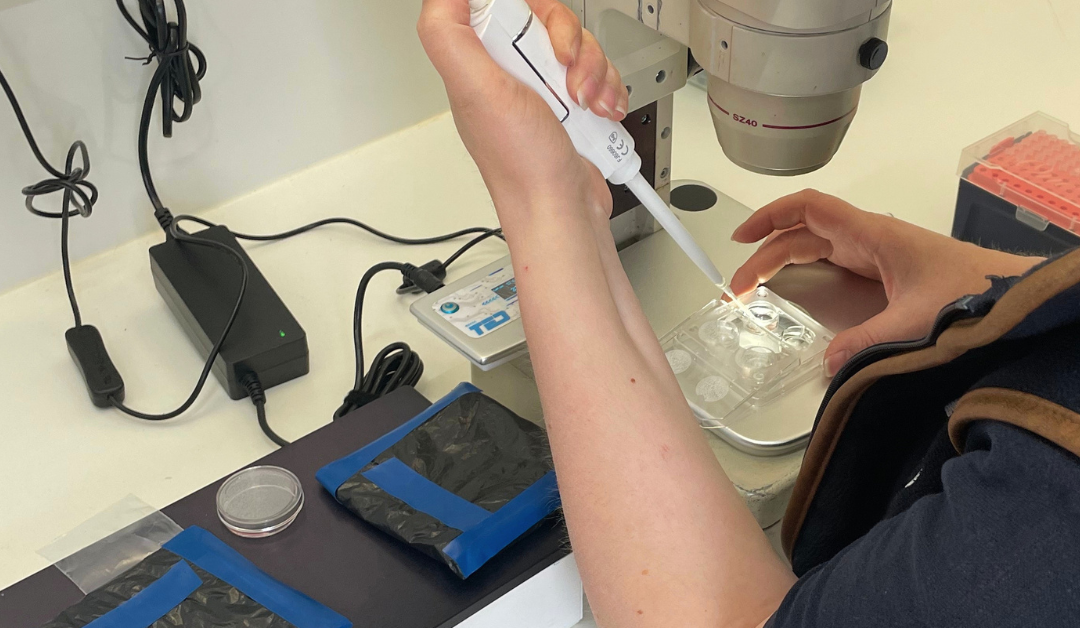
What is Artificial Insemination (AI)?
Artificial insemination (AI) is a breeding technique in which semen is collected from a ram and manually deposited into the reproductive tract of a ewe, rather than relying on natural mating. In sheep, the most commonly used method is laparoscopic artificial insemination (LAI), a specialised procedure that can only be carried out by trained veterinary surgeons.
Using a laparoscope, semen is deposited directly into each uterine horn, placing it close to the site of fertilisation and helping achieve higher conception rates.
AI is widely used in both commercial and pedigree flocks. It allows breeders to access superior genetics and make genetic gains more quickly than would be possible through natural mating alone.
Sheep intended for AI are usually enrolled in an oestrus synchronisation programme prior to insemination. Synchronisation allows large groups of ewes to come into season at the same time, enabling efficient breeding and a more compact lambing period. The use of teaser rams is often incorporated into these programmes to improve synchronisation and reproductive performance. You can read more about this in our blog, Using Teaser Rams.
Why Use AI?
Artificial insemination offers a range of benefits for sheep producers, whether breeding commercial lambs, replacement females, or pedigree stock.
Some of the key advantages include:
- Allows proven sires to be used across larger numbers of ewes.
- Faster genetic improvement within the flock
- Improved production traits such as growth rates, carcass quality, maternal ability, milk production, and prolificacy.
- The ability to use genetics from valuable, retired, or deceased rams through frozen semen.
- Improved biosecurity by introducing genetics without moving live animals.
- Efficient use of superior sires across large numbers of ewes.
- Greater flexibility when planning breeding programmes.
- Access to high-quality genetics without the cost of purchasing and maintaining additional breeding rams.
- For pedigree breeders, AI also provides an excellent opportunity to introduce new bloodlines, reduce inbreeding, and access genetics that may otherwise be unavailable.
Benefits of Fresh and Frozen Semen
Both fresh and frozen semen can be used successfully within AI programmes.
Fresh Semen
Fresh semen typically offers the highest conception rates when collected and processed correctly. Good-quality fresh semen from a single ram allowing large numbers of ewes to be inseminated from a single collection.
Frozen Semen
Frozen semen allows breeders to access genetics from rams across the world and from sires that may no longer be alive. Frozen semen can also be imported from overseas, subject to the appropriate health certification and import requirements. Find out more on about our import and export services here.Additional benefits include:
- Long-term storage of valuable genetics.
- Easier transport and distribution of semen.
- Access to rare or specialist bloodlines.
- Availability of sexed semen in selected sheep and goat breeding programmes.
Synchronisation and the AI Procedure
Before insemination, ewes undergo a synchronisation programme designed to control the timing of oestrus and ovulation.
Typically, this involves:
- Insertion of progesterone sponges or devices.
- Hormonal treatment using PMSG/eCG.
- Careful management of nutrition and flock health.
- The possible use of teaser rams to stimulate reproductive activity.
Following sponge removal, ewes come into season within a predictable time window. The AI procedure is then carried out using fresh or frozen semen.
Using a laparoscope, semen is deposited directly into each uterine horn, maximising the chances of successful fertilisation and achieving the highest possible conception rates.
Expected Conception Rates
Conception rates can vary depending on ewe fertility, semen quality, flock management, weather conditions, and timing of insemination.
As a guide:
- Fresh semen: 75–85% conception rates are commonly achieved.
- Frozen semen: 60–70% conception rates are commonly achieved.
Conception rates at the upper end of these ranges are typically seen where ewe selection, synchronisation, semen quality and flock management are all well controlled.
A trained AI team can typically inseminate up to 300 ewes in a single day, making AI a practical option for both small and large-scale breeding programmes.
Ewe Selection
The success of any AI programme begins with selecting suitable females. Healthy, fertile ewes are far more likely to conceive and maintain a successful pregnancy.
Even the best semen and synchronisation programme cannot compensate for poor ewe health or inadequate preparation.
Ideal Ewes Should Be:
- Free from mastitis, lameness, and other significant health issues.
- Weaned at least six weeks before AI.
- In a body condition score of approximately 2.5–3.0.
- On a rising plane of nutrition for at least three weeks before insemination.
- Appropriately vaccinated and treated for parasites.
- Free from trace element or vitamin deficiencies.
- Of adequate size and maturity to carry and lamb successfully.
Maiden Ewes
Maiden ewes require particular consideration. They should have naturally cycled at least twice before entering a synchronisation programme, ensuring their reproductive system is functioning normally before AI.
Early-Season Breeding
Where AI is being performed early in the breeding season, melatonin implants (Regulin®) may be beneficial in helping ewes’ cycle more consistently and continue cycling following insemination.
Ram Selection and Preparation
Whilst much attention is focused on ewe preparation, ram fertility remains one of the most important factors affecting conception rates.
Semen quality should be assessed regularly before the breeding season, ideally through microscopic examination. Identifying fertility issues before AI day allows time to address problems or source an alternative sire if required.
At our AB Europe centres, semen can be collected from trained rams using an artificial vagina. This method generally provides a more accurate assessment of fertility than electro-ejaculation, which does not always reflect natural semen quality.
Ideal Rams Should Be:
- In excellent health and body condition.
- Free from disease and illness.
- Of good temperament and easy to handle.
- Appropriately vaccinated and treated for parasites.
- Free from lameness, particularly affecting the feet, legs, or back.
- Proven fertile, where possible.
Additional Preparation Guidelines
- Avoid using very young ram lambs where possible.
- Exercise caution when using rams with a history of poor fertility.
- Conduct breeding soundness examinations at least 4–6 weeks before AI.
- Allow rams a minimum of three days sexual rest before semen collection.
- Protect rams from heat stress by providing shade, adequate ventilation, and fresh water, particularly during warmer weather.
Fertility can be one of the first areas affected when a ram experiences illness, nutritional deficiencies, or heat stress. Early assessment allows sufficient time to identify problems and source alternative sires if necessary.
Planning for Success
Artificial insemination can be an effective way to introduce new genetics and increase the rate of genetic improvement within a flock. However, consistent conception rates depend on careful planning and thorough preparation of both ewes and rams.
Good flock health, effective synchronisation, quality semen, and careful animal selection all play an important role in achieving strong conception rates and getting the most from an AI programme.
Services
Whether you are looking to introduce new genetics, improve flock performance, or establish a structured breeding programme, our experienced team can help.
For more information about our laparoscopic AI services, semen collection, synchronisation programmes, import and export services, or fertility testing, please visit our Services page or contact your local centre.
Our team can discuss the options available and help you plan a programme that suits your flock.
Recent Comments